
As mentioned in a previous entry, our first outing as a cohort this semester was a semi-guided walking tour of the Dallas Arts District, led by our Fundraising professor. The Dallas Arts District is the largest contiguous urban arts district in the nation, spanning 118 acres. Essentially, it is a boulevard in the northeast corner of downtown Dallas where the largest and most notable arts organizations are located: The Dallas Museum of Art, the Nasher Sculpture Center, the AT&T Performing Arts Center, the Dallas Symphony Orchestra, the Dallas Opera, the Dallas Theater Center, and several others.
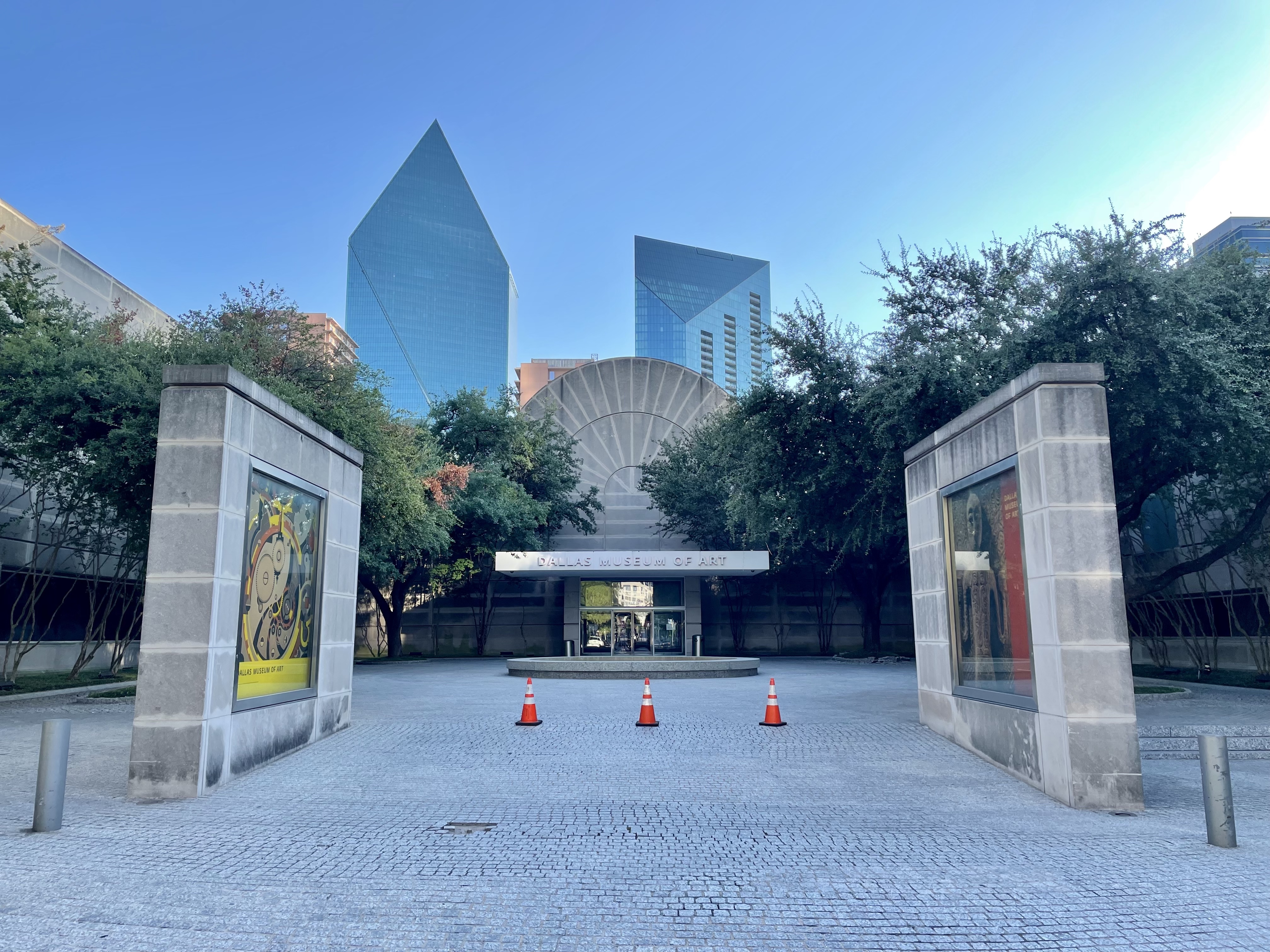
Dallas Museum of Art 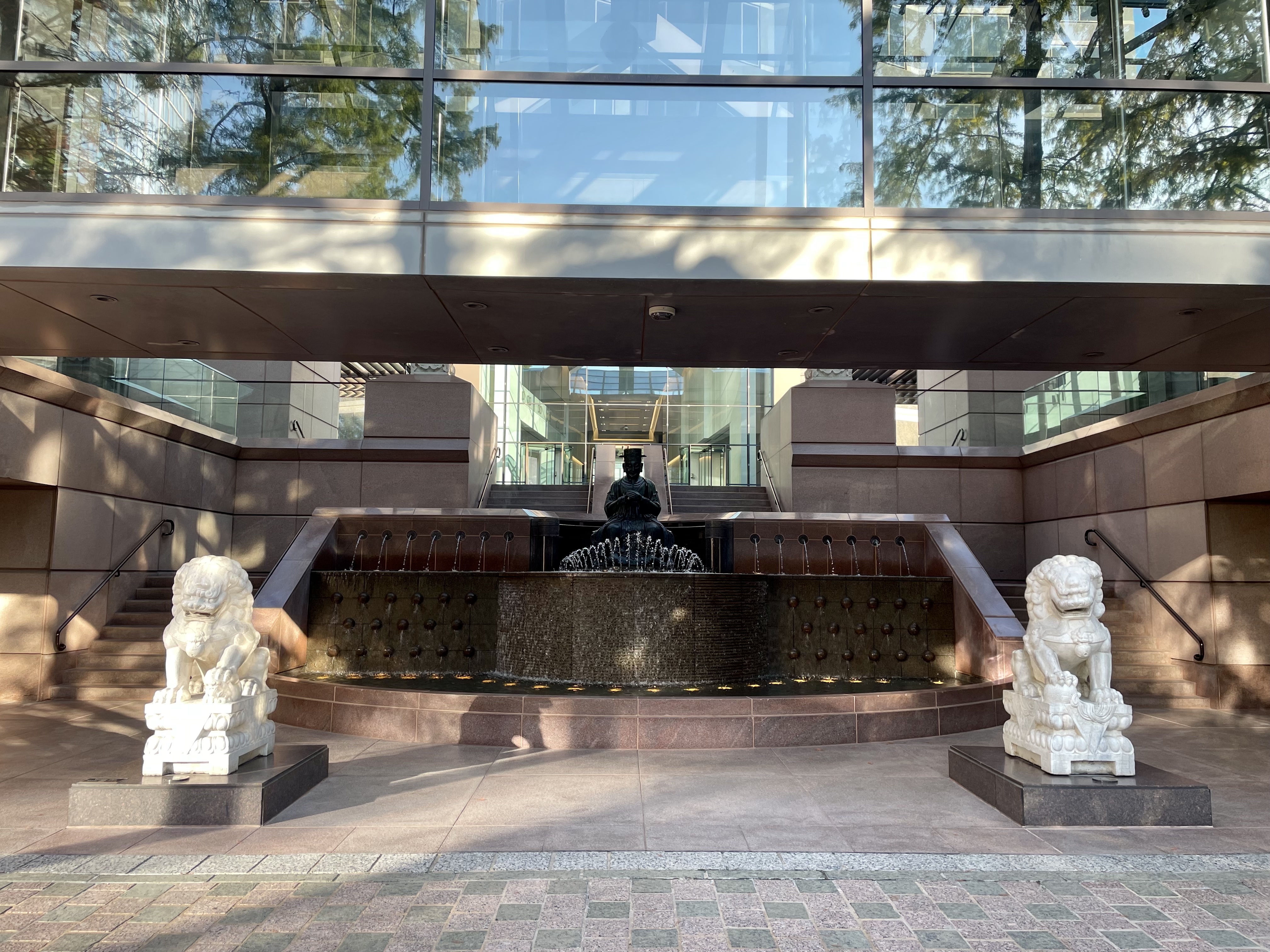
Plaza outside the Crow Museum of Asian Art 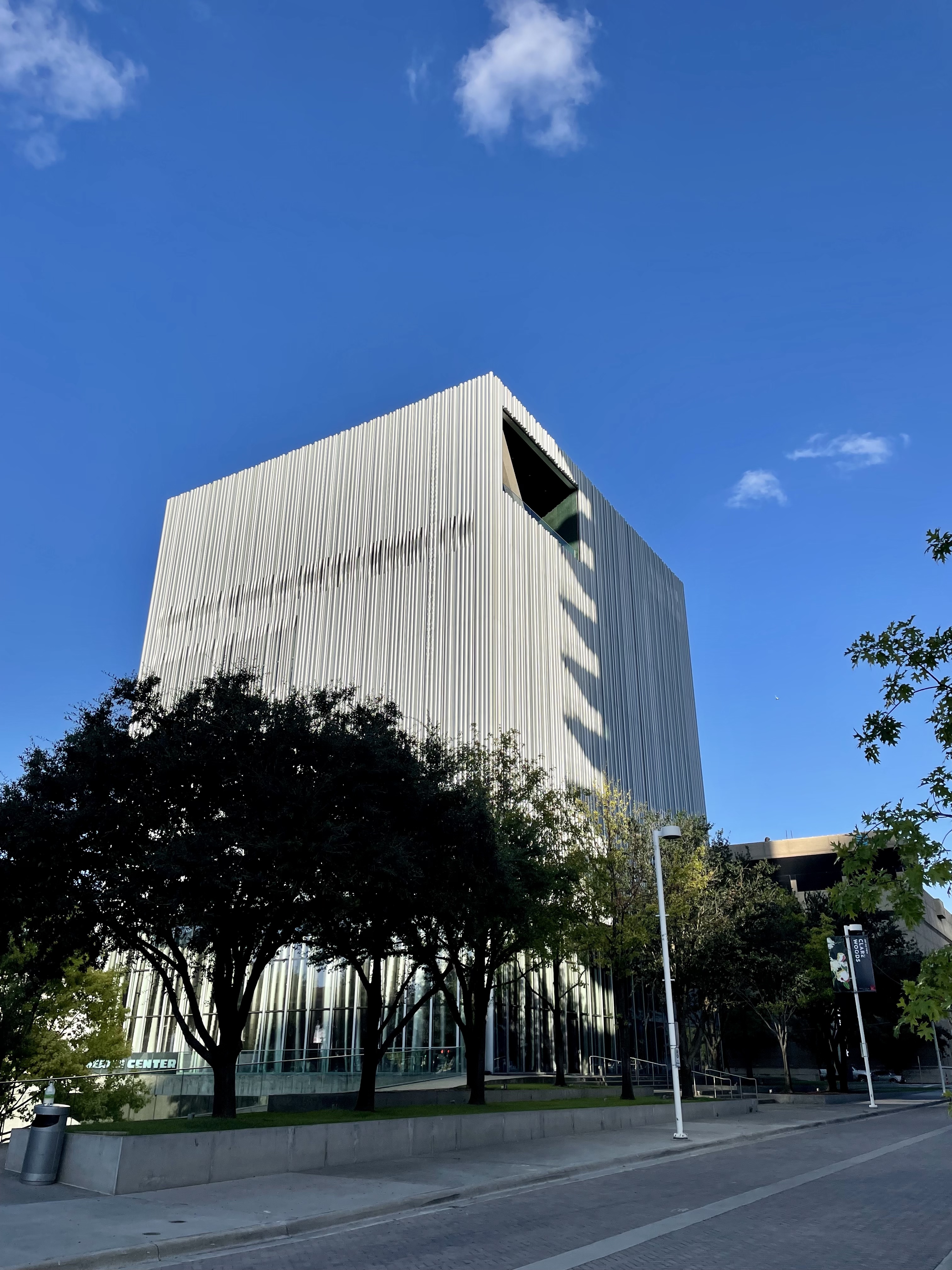
Dee and Charles Wyly Theatre (AT&T Performing Arts Center) 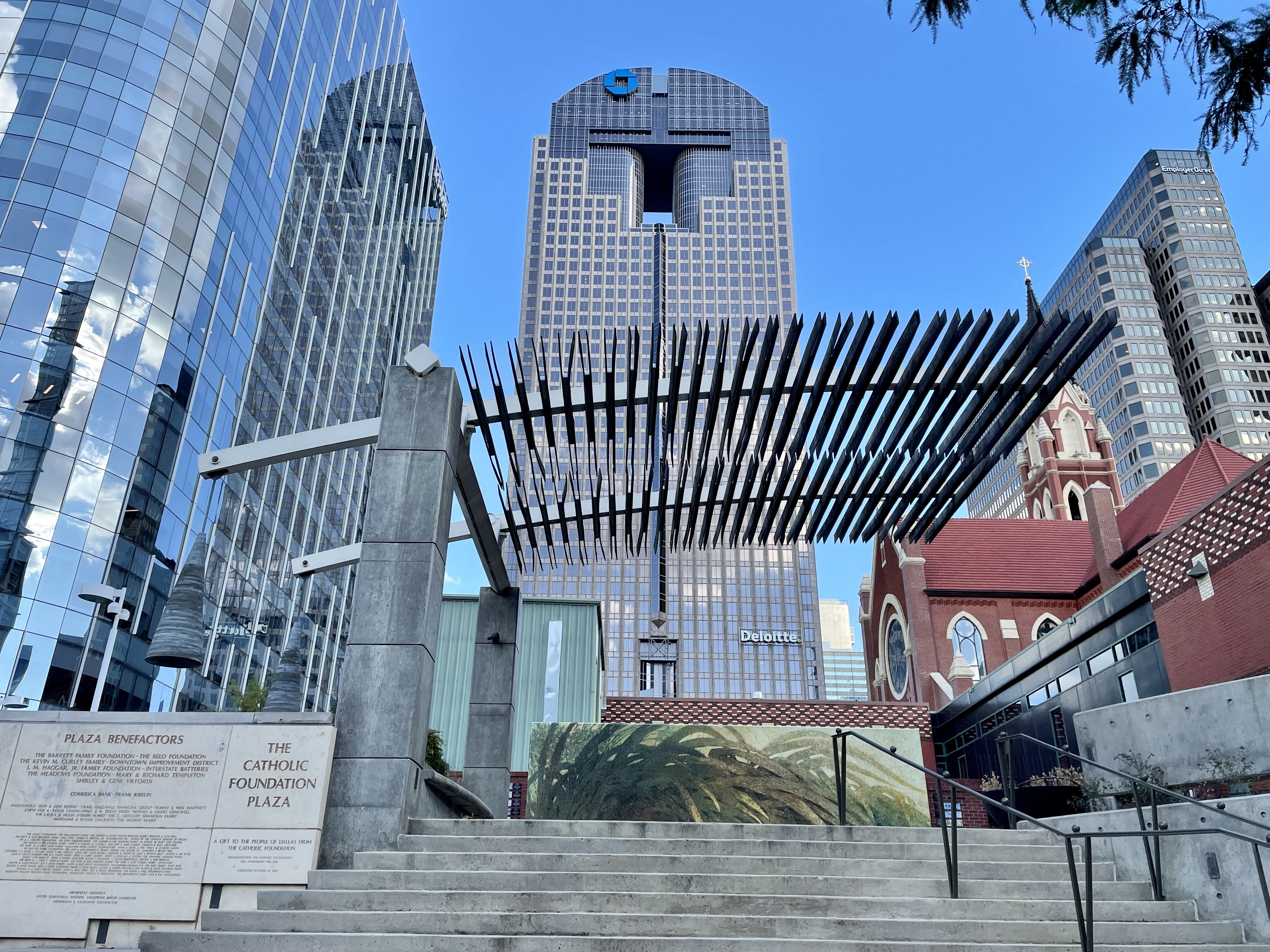
The Catholic Foundation Plaza with Cathedral Guadalupe and Chase Tower in the background 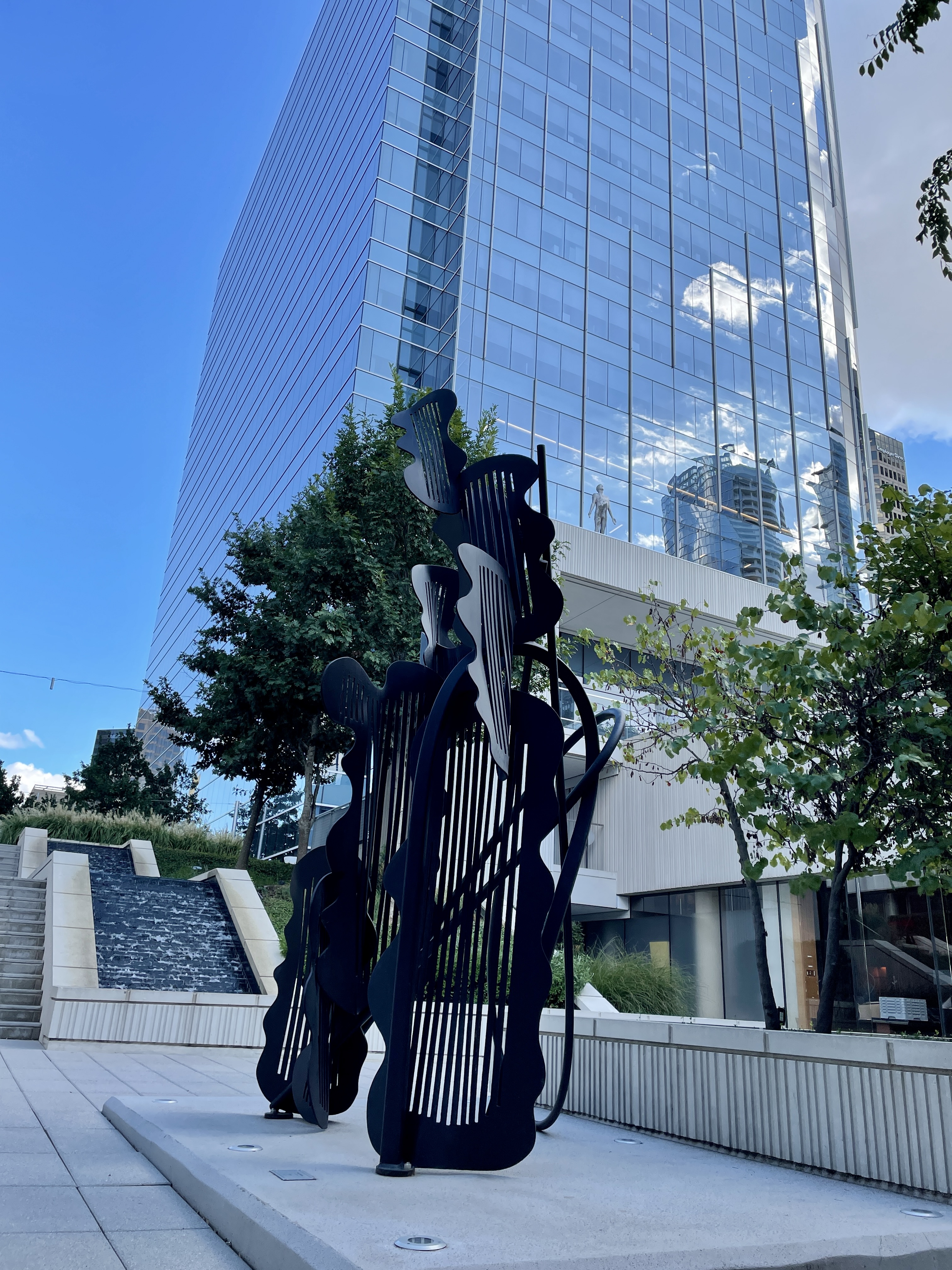
Sculpture near KPMG Plaza at Hall Arts 
The Dallas Theater Center 
The historic Moorland YMCA building, home to Dallas Black Dance Theatre. 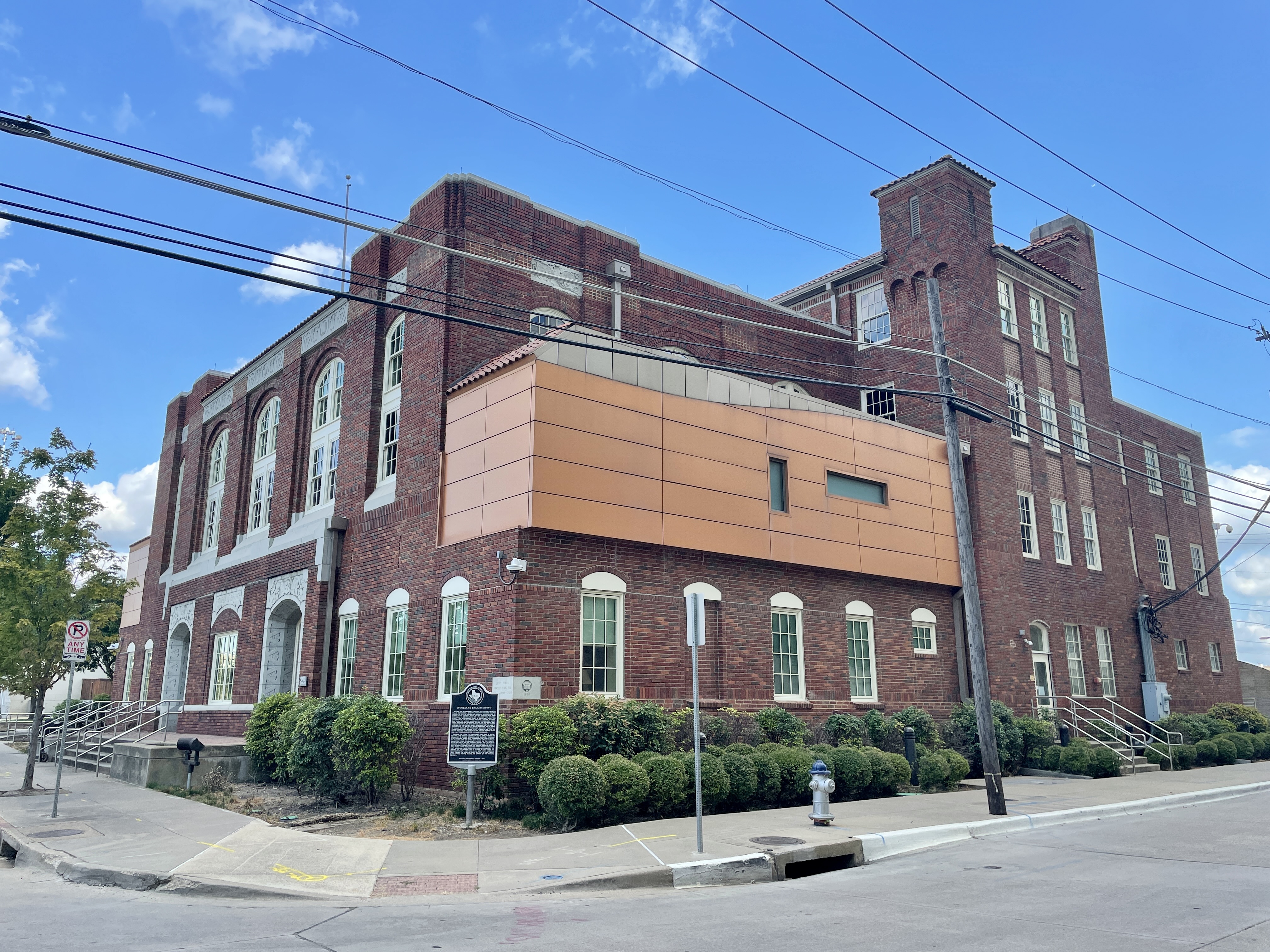
The historic Moorland YMCA building, home to Dallas Black Dance Theatre. 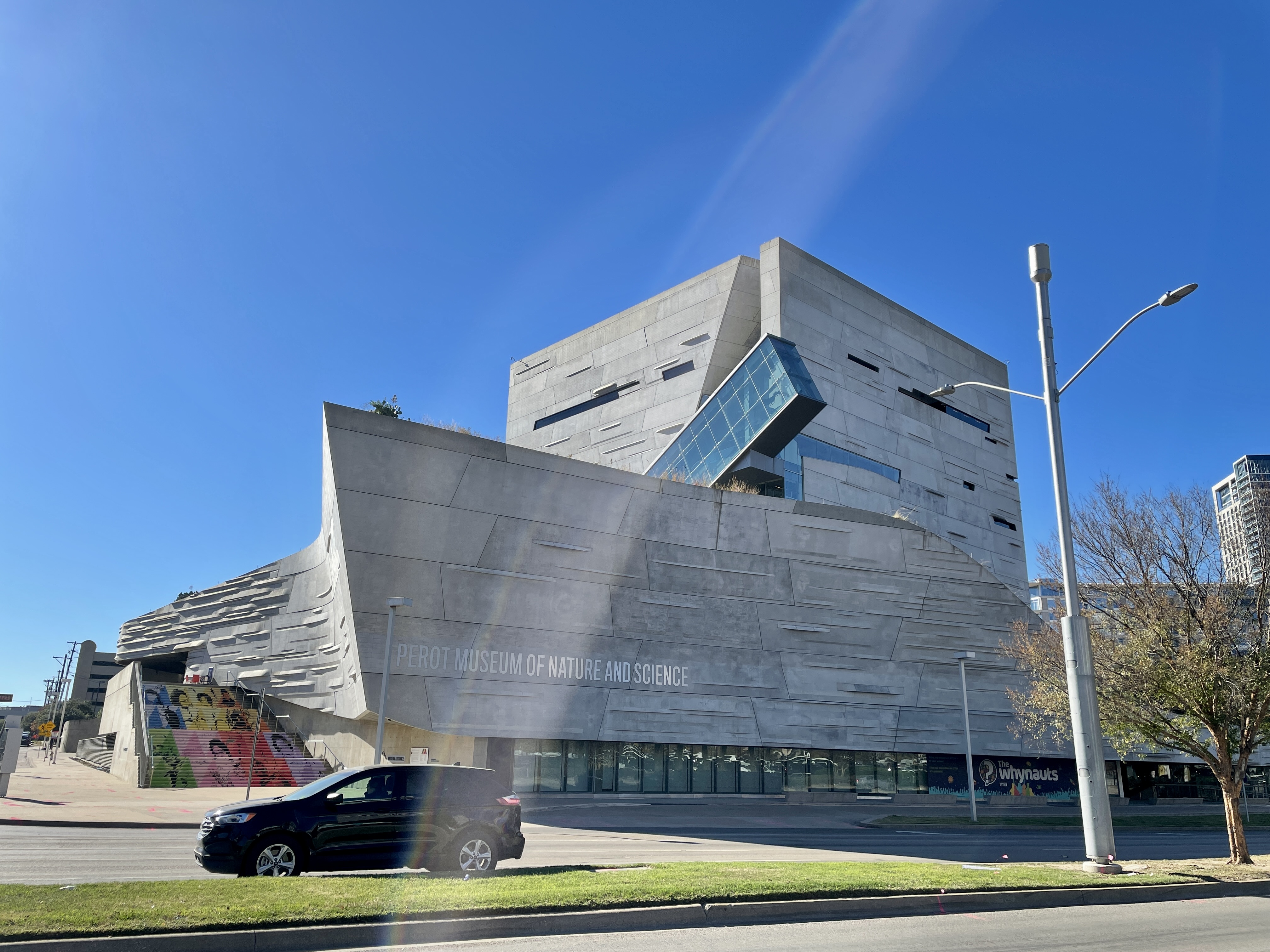
Perot Museum of Nature and Science 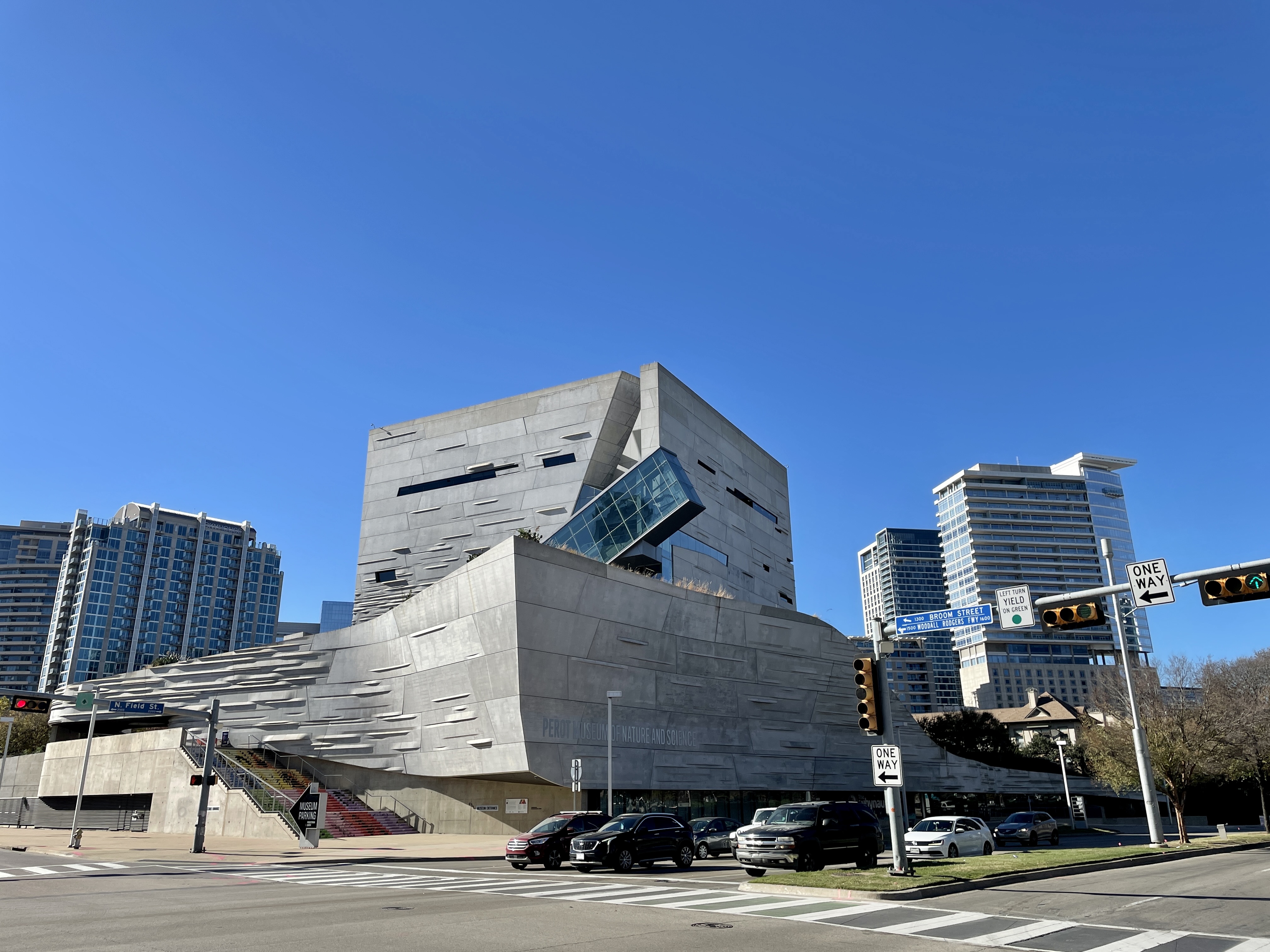
Perot Museum of Nature and Science 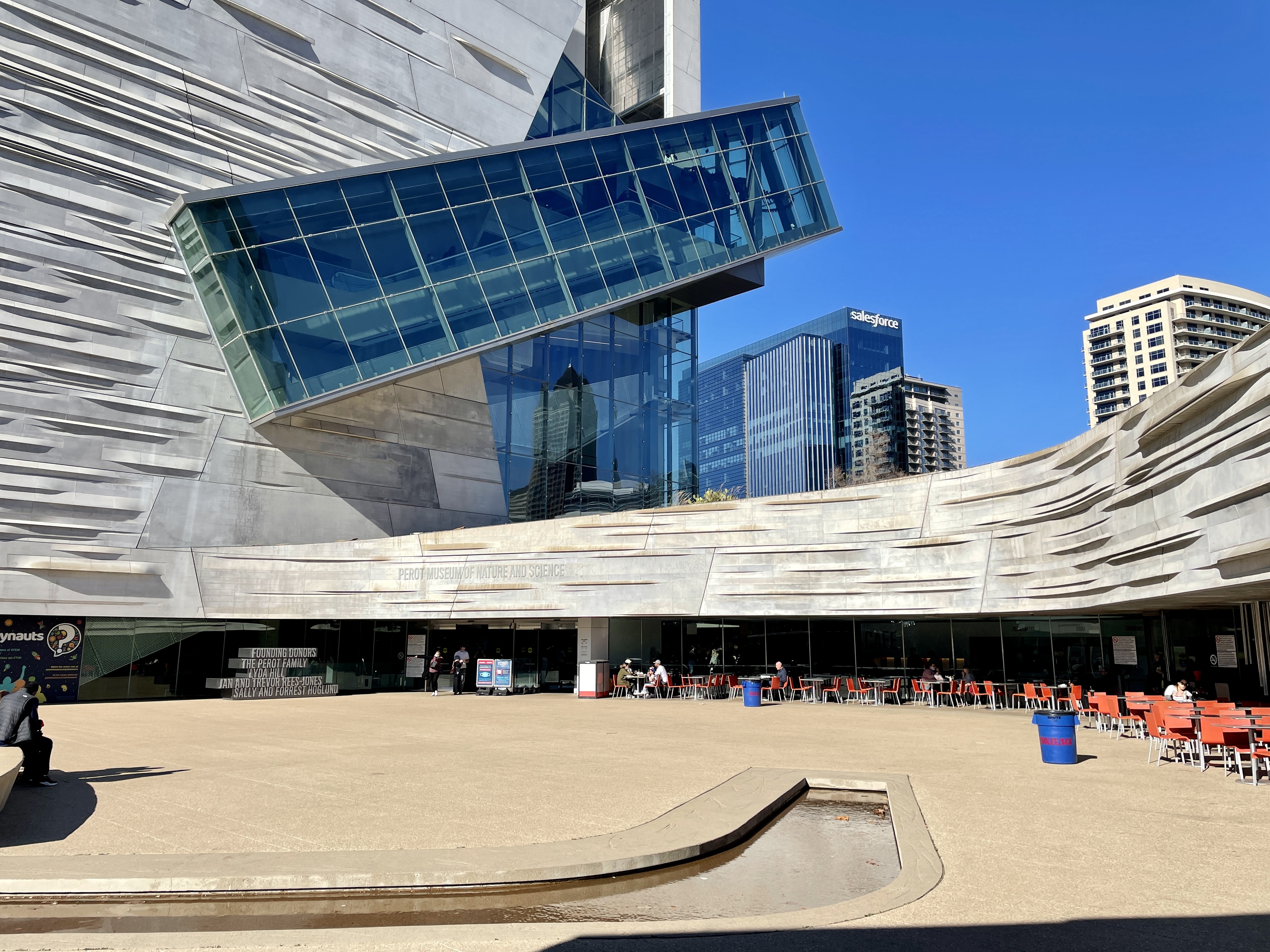
Perot Museum of Nature and Science
I remember walking along Flora Street for the first time and, while appreciating the grandeur of some of the buildings (the neighborhood has more buildings designed by Pritzker award-winning architects – including I.M. Pei and Renzo Piano – than any location in the world), I felt something was a bit… off. It was early evening on a Friday, a time you’d expect downtown to be buzzing with people and activity, and yet the district felt oddly still. It wasn’t just a consequence of the pandemic either; Dallas businesses were still open at the time. As I observed more closely, I started wondering to myself, “Even if there were people here, where would they go?” There was no park space to speak of, no visible dining options, even some of the building entrances seemed concealed and obscure. By the end of our tour, I remember thinking, “It’s as if someone tried to design what they thought a world-class cultural district looks like, despite having no knowledge of what an actual world-class cultural district looks like.” As it turns out, my instincts were not far off from the truth.
The following week, we met with the leaders of the Dallas Arts District and learned more about its history. It was the origin story that stood out to me. Twenty years ago, Boeing was shopping for a new headquarters. Dallas desperately tried to woo the aerospace giant, but ultimately the tax incentives and business-friendly environment weren’t persuasive enough as Boeing preferred Chicago’s abundance of cultural facilities. Dallas leaders swore to themselves, “Never again!” and committed to building a downtown cultural corridor that would attract prospective mega corporations in the future.
As was explained to me by several professors and arts leaders I met in Dallas, the City selected a blighted, impoverished section of downtown to be the Dallas Arts District and redeveloped it by constructing new, state-of-the-art buildings and relocating Dallas’ arts organizations into those buildings. In the process, unsurprisingly, the residents of that community (mostly Black and poor) were forced to find a new neighborhood to live in. Furthermore, the plan that developed the district ignored some fairly obvious logistical elements that would facilitate a more inclusive and welcoming experience for a broader demographic: there is no public transportation nearby, there is a lack of signage showing where things are, dining options are hidden away inside towers, it’s not particularly handicap friendly, the layout of the streets and the scheme of building entrances are illogical and make the district feel shut off from the rest of downtown life. The end result is a district where people drive in from the suburbs or other neighborhoods to see a show or tour an exhibit inside one of the beautiful buildings, then get back in their cars and drive home – hardly what I would consider the hallmarks of a world-class cultural district.
The point I want to make is that a result like this is predictable when your whole raison d’être is to attract corporate interests. The Dallas Arts District was not designed with people in mind, it was designed with big business in mind. It feels non-inclusive because it was never intended to be inclusive. And such an orientation, I argue, is antithetical to what the arts are about. I want to be clear that I in no way fault the people currently working at the Dallas Arts District or any of its affiliates, some of whom have become friends of mine. I know they are working hard to improve the design and experience of the district. The onus belongs to a city leadership structure and culture that is heavily influenced by a “profit over people” mindset and the inertia of historical, systemic racism (a topic I may touch on in a future post).
“What is your ‘why’?” is a question I often ask candidates I’m interviewing for open positions because the answer is always telling. One’s core motivation – the value system that guides their being – fundamentally shapes the outcomes of their endeavors. It’s predictive. The “why” informs the “who, what, where, when, and how.” While the “why” that guided the original development of the Dallas Arts District leaves much to be desired, there is hope that the new direction they are going will be much more inspirational.
What are your thoughts? Do you agree with the power of the “why”? What does a world-class arts district look like to you? Comment below!
 My MMIAM Journey